LAWCO.NEWS
Mr.Newz Indiana
Solar Panels or Soybeans? Greene County’s Farmland Debate Intensifies
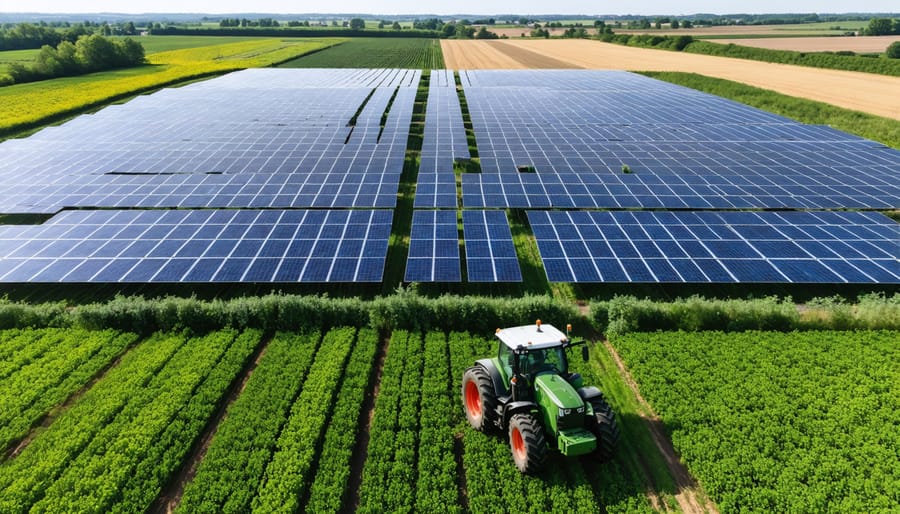
Solar Panels or Soybeans? Greene County’s Farmland Debate Intensifies
Fairplay Township, Greene County — Large-scale solar development continues to test the balance between new energy projects and the long-term value of productive farmland in rural Indiana. The Worthington Solar project, proposed by Geronimo Power (now part of Brookfield Asset Management), has become one of the clearest local examples.
The project is planned for land in Fairplay Township near the intersection of State Roads 57 and 67. Developers describe a facility of up to approximately 150 megawatts of solar generation paired with battery storage. Project boundary figures have ranged from roughly 1,300 to more than 2,000 acres of leased land, with the fenced panel area expected to be substantially smaller — often cited around 800 acres. Commercial operation is targeted for the late 2020s, with construction potentially beginning in 2027.
In late 2025 the Greene County Council approved a 10-year abatement on business personal property after extended public hearings. In exchange, the developer committed to $2.5 million in economic development agreement payments spread over that decade, along with road-use and other commitments. Real property remains subject to the state’s solar assessment framework.
Public comment during the hearings reflected the familiar split seen across much of rural Indiana. Some landowners who signed leases see stable, higher annual payments. Other residents raised concerns about the permanent conversion of working ground, potential long-term environmental questions, visual and property-value effects on neighboring farms, and whether temporary tax abatements deliver lasting public benefit.
A 10-Year Look at the Numbers — Tilting Toward Farmland
Solar leases in Indiana commonly offer landowners $800 to $1,200 or more per acre per year once a project is operating — several times the prevailing cash rent for cropland. In Greene County and the broader southwest region, recent cash rents for average- to better-quality ground have run in the $200–$280 per acre range according to Purdue surveys. On pure cash-flow terms for participating owners, solar usually wins in the short and medium term.
A longer view that includes the land itself, however, changes the picture. Consider an illustrative 10-year comparison focused on the core panel area (roughly 800 acres):
- Continued farming / cash rent: At a conservative local cash-rent figure of $250 per acre, 800 acres generate about $200,000 per year, or roughly $2 million over a decade. The land remains productive, supports local input suppliers, equipment dealers, and farm labor, and retains its underlying value as agricultural real estate. At the end of the decade the owner still holds a flexible, multi-use asset that can be farmed, sold, or leased again under ordinary market conditions.
- Solar lease scenario: Higher annual payments to participating owners are real and attractive. Yet the land is typically committed for 20 to 40 years. Decommissioning obligations, soil recovery costs, and the loss of continuous agricultural production become future liabilities. County tax revenue is constrained during the abatement period; the $2.5 million in EDA payments, while useful, is modest relative to the scale of the project and the land taken out of traditional use. Neighboring farms that did not lease can face changed drainage patterns, altered viewsheds, and potential pressure on local land markets.
Rural Character and Local Control
Beyond the spreadsheet sits the question of what kind of landscape Greene County wants to maintain. Working farmland supports a pattern of ownership, employment, and community life that large industrial solar arrays, by design, interrupt. Supporters of the projects emphasize private property rights, landowner income, and the need for additional generation. Critics emphasize that once productive fields are covered, the rural character of townships like Fairplay is altered in ways that cash payments alone do not restore.
Greene County is not unique. Similar debates are underway across Indiana as utility-scale solar expands. The Worthington project simply makes the trade-offs concrete: short-term lease income and limited county payments versus the ongoing productivity, flexibility, and community fabric of farmland that has defined this part of the state for generations.
As construction timelines move closer, the practical test will be whether the long-term accounting — land, soil, local economy, and character — continues to favor the fields that remain open.