
Bloomington Bids Farewell to Flock but what about Bedford?
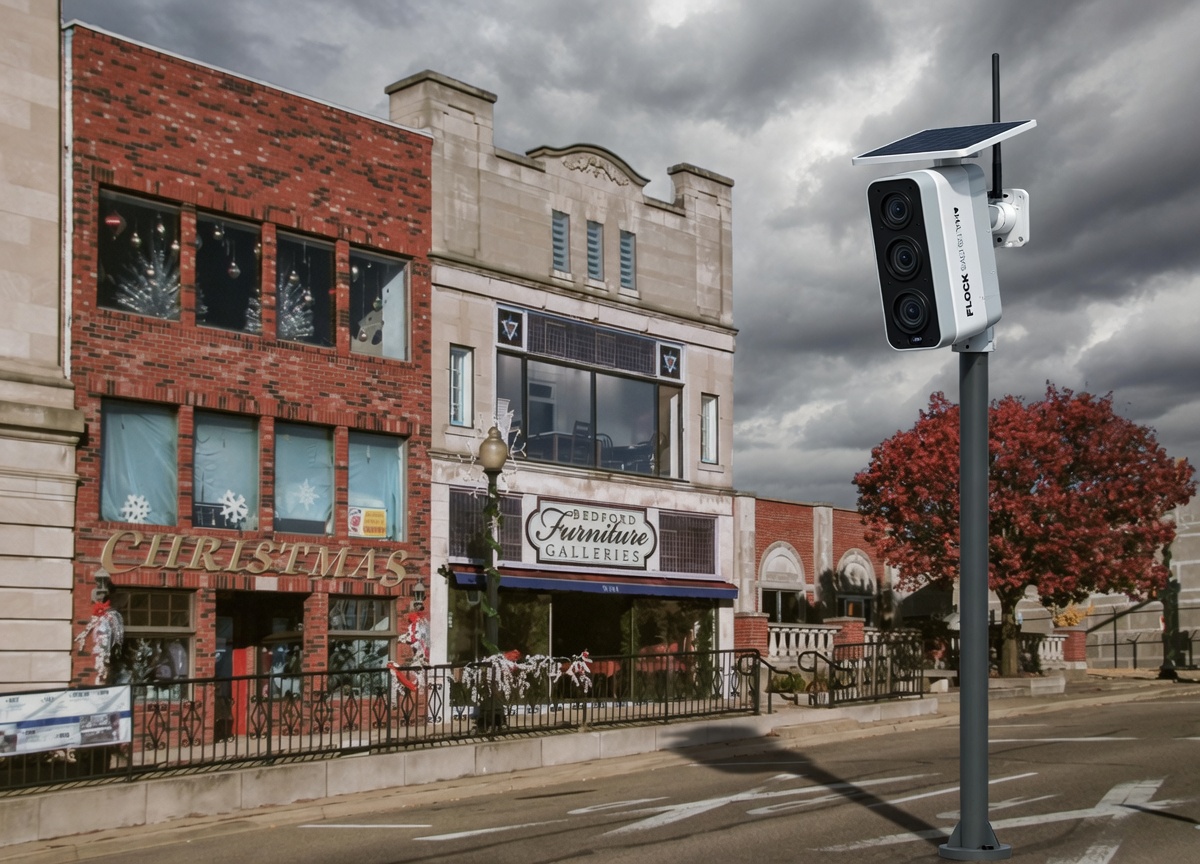
In a move announced this week, the City of Bloomington, Indiana, is transitioning away from its contract with Flock Safety, the Atlanta-based provider of automated license plate reader (ALPR) cameras. Mayor Kerry Thompson stated that the contract expired on March 5, 2026, following a months-long internal evaluation, and will not be renewed. City officials framed the decision as a thoughtful step toward technologies that “better balance public safety needs with privacy protections, transparency, accountability and public trust.”
On the surface, it sounds like a principled stand against mass surveillance. Bloomington Police Chief Michael Diekhoff submitted a report, and the city emphasized a responsible wind-down to avoid public safety gaps. Yet a closer look raises questions about just how sincere this pivot really is especially for a city that has quietly built and maintained its own suite of intrusive monitoring tools for years.
Bloomington isn’t exactly a surveillance virgin. Long before Flock arrived, the city operated its own network of license plate readers, fixed video cameras, and mobile surveillance trailers (some equipped with gunshot detection capabilities). These homegrown systems have been feeding data to local law enforcement without the same level of public scrutiny or national controversy that Flock attracted. The Flock contract itself was relatively modest reportedly in the neighborhood of $50,000 annually making its cancellation as much about budget housekeeping as any grand ethical reckoning.
And let’s be honest about the political optics. Bloomington is a progressive college town anchored by Indiana University. Flock Safety has become a lightning rod for leftist activism nationwide. Critics often the same voices pushing “defund the police” narratives have hammered the company over its ALPR network’s potential for broad data sharing with federal agencies, including ICE under the current administration. Public comments and protests have explicitly tied Flock to hot-button issues: surveillance of pro-Palestine demonstrations, abortion-related cases, and other causes dear to the progressive base. Cities like Flagstaff, Cambridge, Eugene, and Santa Cruz have similarly ditched Flock amid privacy alarms and immigration fears. In Bloomington, council resolutions and resident pressure made keeping the contract politically toxic. Dropping Flock lets officials keep their progressive constituency happy while quietly retaining (and presumably upgrading) their existing surveillance infrastructure. It’s a low-cost way to signal virtue without actually dismantling the surveillance state they’ve nurtured for years.
So where does that leave smaller, less ideologically driven communities nearby like Bedford, Indiana?
Bedford and Lawrence County never had the luxury of Bloomington’s resources or its activist class. Before Flock, local law enforcement operated with more traditional, limited tools. Mass automated tracking simply wasn’t feasible on tight budgets and without the political will to push back against privacy concerns. The Lawrence County Sheriff’s Department now runs at least eight Flock Safety ALPR cameras, giving officers a powerful new capability they previously lacked.
With no campus-driven protests or “Abolish Flock” campaigns pressuring them, Bedford-area leaders face zero incentive to follow Bloomington’s lead. They’ve had a taste of what real-time vehicle tracking can do for investigations, traffic enforcement, and crime response. Why give it up? There are no “leftist constituency” demands for divestment here, and the fiscal argument cuts the other way: the technology delivers results at a price smaller departments can actually afford.
This raises an uncomfortable question for anyone who values privacy in places like Bedford: Now that local governments have sampled the Orwellian fruit, will they honor residents’ expectations of limited government intrusion—or will the surveillance creep continue unchecked? Bloomington’s move feels more like rebranding than reform. For Bedford and similar communities without the same political theater, the path forward looks less like divestment and more like expansion. Without external pressure or principled resistance, the advancements in automated monitoring may simply become permanent fixtures of everyday life—quietly, efficiently, and with far less fanfare.
The real test of sincerity isn’t what a liberal college town does under activist heat. It’s what happens in the towns that never faced that heat to begin with. Bedford’s residents might want to start asking their sheriff and county officials exactly what their long-term plans are for these cameras—before the “taste for spying” becomes policy set in stone.