From Quarries to Landmarks: Limestone’s Quiet Role in America’s 250th Year
 Mr.Newz
Contributor
Mr.Newz
Contributor
From Quarries to Landmarks: Limestone’s Quiet Role in America’s 250th Year
BEDFORD — When the America 250 parade rolled through downtown Bedford on July 4, an 18-ton limestone obelisk led the way. Twenty feet tall and carved from local stone, the monument was a straightforward reminder that the same rock that once left these hills for the Empire State Building, the Pentagon, and the National Cathedral still sits under Lawrence County.
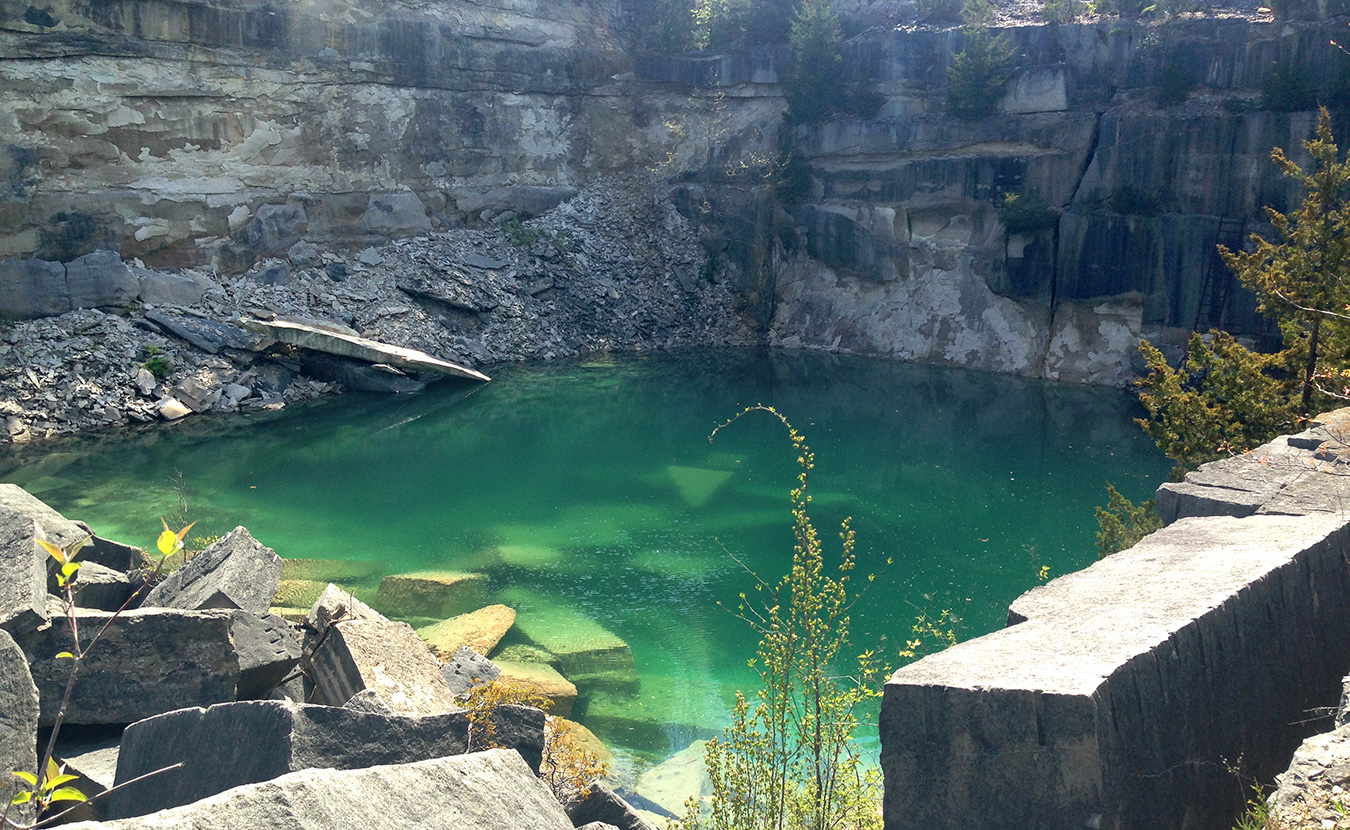
Indiana limestone — known to geologists as Salem Limestone and locally as Bedford stone — comes from a narrow belt only about 10 miles wide and 35 miles long that runs through Monroe and Lawrence counties. The stone is nearly pure calcium carbonate, fine-grained, durable, and workable. That combination made it the preferred building material for generations of architects who needed something that could be carved precisely yet stand for centuries.
Commercial quarrying began in the mid-1800s. By the early 20th century the industry had become the economic backbone of the region. In 1926 a major consolidation created the Indiana Limestone Company, combining many smaller operations into a single force that could supply large national projects. The company marked its 100th year in 2026. Its stone has gone into dozens of state capitols, major university buildings, and national landmarks. The Pentagon’s exterior is Indiana limestone. So is much of the National Cathedral. The Empire State Building used it extensively.
The Local Industry Today
The work continues, quieter than in the peak decades but still rooted here. Three names stand out among the active players with strong Lawrence County ties:
Indiana Limestone Company remains the defining presence. Now part of the Polycor group, it continues to quarry and supply dimension stone from the historic district around Bedford and Oolitic. The company has adapted to modern markets while keeping the continuity that began with the 1926 merger.
Evans Quarries (Evans Limestone) operates from its long-standing location on Limestone Drive in Bedford. The company produces quarry blocks and has been a consistent local supplier for decades, serving both regional and larger fabrication needs.
Elliott Stone Company and other long-time fabricators and smaller operators such as Indian Creek Stone Products keep skilled cutting and finishing work alive in the county. These firms handle the detailed work that turns rough blocks into architectural elements — the kind of craftsmanship that once built the region’s reputation and still supports local jobs.
Together they represent the practical side of an industry that no longer dominates every street corner but still shapes the landscape and the local economy. Quarries continue to extract the stone. Mills cut and shape it. Fabricators finish the pieces that go into new construction and restoration projects across the country.
A Steady Presence
Limestone Month, celebrated each June since 2007, and the annual Limestone Heritage Festival keep the story visible. Exhibits at StoneGate, walking tours, and the simple fact that the stone is still being quarried and carved remind residents that this is not only history. The same geology that produced the famous buildings also produced the hills, the caves, and the character of the place.
In a year when the nation marks 250 years, the limestone of Lawrence County offers a quiet lesson. Some contributions are loud and temporary. Others are quiet and permanent. The stone that left these quarries still stands on buildings that define American civic life. The companies that still work it here keep a skill and a resource alive. And the people who live among the remaining hills and old mills still get to walk past the source every day.
That is the quieter role limestone continues to play — not as a slogan, but as a foundation that has lasted.
No thoughts yet — be the first.